Monday, March 14, 2016

It's Not the Wolf, It's the Pack.

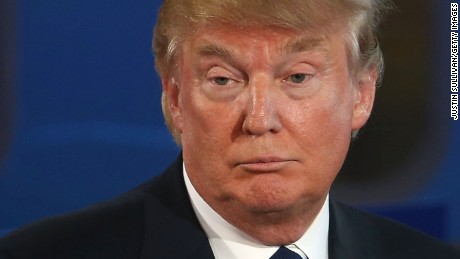
  Let's get this out of the way: Donald Trump is not going to be the President of the United States. The only reason he is doing as well as he is in the Republican primary race is the paucity of good options in their candidate field, the insurgent nature of their party base, and the rules of the election itself which allows any candidate to win by plurality.

  The concern about Trump should therefore not be about him actually having access to nuclear missiles. Nor should anyone bother anymore with the question of Trump's sincerity, i.e. whether this is all just a big publicity stunt. Such speculation is irrelevant because whether he truly buys into the parade he's marshaling, all that matters is the parade itself. Trump's negative impact on electoral politics in the United States will be felt in ways both immediate and long-term. In all manifestations, his impact will be negative.

  First, American Liberals, along with everyone else on earth, rightfully disparage Republicans for their denial of scientific facts, so being unconcerned with truth is nothing new for the GOP. In every GOP primary race since 2008, candidates from Rick Santorum, to Hermann Cain, to Michele Bachman have had their moments in the sun, and when enough light was shined on them and the kind of ignorance they represented they were required to go back to the shadows. Trump, however, pushes the envelope of fact-denial well beyond global warming, evolution, and vaccinations.Trump lies consistently (Check out Politico's summary covering just one week of false statements), and commits gaffs ("Rapists!", and "Megan Kelly's a woman!") that would end the campaigns of virtually any other candidate in recent memory.  Trump, however, has survived, and one cannot simply conclude that his charisma and media savvy are alone responsible: his supporters just don't give a damn about facts.

  A broad base of support that just does not concern itself with truth is dangerous for many reasons, but even more so when combined with the the oldest political tradition in the United States, one which predates the Republic and has been with us since the colonial period: Racism. Pat Buchanan's two primary campaigns in the 1990's seem tame compared to Trump's, if only because after winning New Hampshire in '92 Buchanan's unwanted endorsement from David Duke rightfully hurt his campaign. Trump has remarkably survived his David Duke moment, which he should never have gotten to in the first place given his proposed policy of blocking Muslims from immigrating to the United States, or of expelling all undocumented immigrants en masse from the country and forcing Mexico to build a wall along our southern border.

  While Republicans are obviously guilty of starting the so-called "Southern Strategy" by attracting the old Dixiecrat vote using code words like "law and order" and "welfare queens", there hasn't been, in nearly 50 years, a space deliberately created for White Nationalists on the national political scene. That has changed. Beyond simply playing with racism, Trump's campaign has actually provided a space for out-right ideological racists to operate in plain sight. They openly talk of attending his rallies, and mingling with his supporters, and of ditching the Confederate Flags and Swastikas and picking up Trump signs. While it is true most Trump fans don't see themselves as racists, polling done right before the Iowa Caucus and New Hampshire Primary demonstrates that a majority of his supporters do hold racist views, particularly towards Hispanics, Muslims, and people of middle eastern and south Asian descent.

  This direct link with fascists adds a certain color to what happened in Chicago this past Friday night. Trump claims he shut his rally down voluntarily after consulting with the Chicago PD, but was quickly refuted by CPD spokesman Anthony Guglielmi. It's impossible to know for sure what was going through Trump's mind, but as Rachel Maddow pointed out on her show Saturday, it's hard not to see a more deliberate hand in all this. Trump may not have known for certain the Chicago rally would lead to larger protests than he'd expected, but it was an opportunity to avail himself of a quintessential strategy in the demagogue playbook: Invent or distort a narrative, inflame passions, provoke angry responses, and then present yourself as the only person who can fix it. How convenient that African-Americans had so far escaped his worst vitriol, right up until he had the opportunity to refute and attack David Duke. He waffled, and then planned rallies in cities that are experiencing heightened racial tension due to high-profile police shootings of unarmed black men. There was no question activists would seek to disrupt his events. Shutting down his Chicago rally was the equivalent of saying to his supporters, "See folks, this is what democracy gets you. This is what you have to put up with if I'm not in charge."

  All of this, the willful and prideful ignorance, the acceptance of racist elements, and the incitement of violence as a means of drawing attention, are a toxic brew. Nonetheless, if we think of Trump as the id of the American psyche, an ugly impulse, the worst manifestation of the noxious and myopic nationalism fomented since 9/11, perhaps the anger he promotes will simply fade when he does. Or, even if he can't achieve higher office, what will be the outcome of millions of Americans who felt energized by his campaign meeting up with some of the most dangerous fringe elements in the country? What will they plan? What will they organize?

  What of the impact on electoral politics? Major realignments in the American political party system have depended on whether a party's more racist elements are on board with changes being made at a national level. The revolt of southern Whigs in the antebellum period led directly to the formation of the northern, anti-slavery Republican Party. The endorsement of the civil rights movement by northern and western democrats led to the Dixiecrat revolt in 1948-68. If you're a Democrat, a fracturing of the Republican Party might sound like a good thing, but if either of those historical examples teach us anything, it's that if a faction leaves one party, it is often absorbed by another. Pro-Slavery Whigs became Democrats, and Dixiecrats became Republicans. Already the Neo-Con wing of the GOP, the extremely twisted and mis-guided ideological architects of the Iraq War, has openly stated it will side with Clinton if Trump wins the nomination. If the collapse of the Republican tent leads to an increase of the size of the Democratic one, how soon before a neo-conservative wing of the Democratic party fissures with what is emerging as the Social Democratic wing led by Bernie Sanders?

Friday, October 16, 2015

Pentagon knew Kunduz MFD facility was a hospital

  The Associate Press reported yesterday that the Pentagon knew a hospital run by Doctors Without Borders (MSF) in Kunduz, Afghanistan was, indeed, a hospital, and that they had ordered the site be placed under surveillance prior to the hospital's destruction. Special Operations analysts apparently suspected that the site was being used by a Pakistani ISI agent to coordinate Taliban attacks against Afghan and US forces.

  Whether the commanders who ordered the strike had this information in hand when the order to attack the site is unclear. The Pentagon has shifted its position, as well as its narrative of events, several times. The report cites anonymous analysts claiming the strike was "justified" due to their assumption the Pakistani agent was killed. No evidence suggests any Pakistani nationals were present in the office, and MSF flatly denies this assertion.

  This means that a civilian facility was flagged, prior to being destroyed, as a potential hostile target. The Pentagon can also no longer claim they didn't know the MSF facility was a hospital, which means a case can now be made this act was, in fact, a war crime.


Wednesday, October 14, 2015

Bernie Sanders' Lost Opportunity

  At the Democratic Party Primary Debate held last night in Las Vegas, I think I anticipated more of a grudge match between Hillary Clinton, Bernie Sanders, and Martin O'Malley, fueled partly by Jim Webb and Lincoln Chafee attempting to make strong use of what was sure to be limited air-time. All of the candidates had something to gain, and some a lot to lose, with good showings. CNN's intro may have hyped up my expectations as it was clearly modeled on a pro-football broadcast, or maybe American Idol. It was a ridiculous way to introduce such an event, yet I may have been subconsciously amped by it.

  Boy, was I disappointed.

  Just to get it out of the way, Webb and Chafee are completely finished. Whatever policy positions they may advance from here on out are irrelevant given the incredibly awkward nature of their delivery and their clear discomfort as public speakers (btw, Jim Webb killed a guy?). So they're done. Gone. Finis. Oh, and Martin O'Malley accepted money from the NRA in 2012. He was also Baltimore's worst mayor and the basis for Littlefinger running that city in The Wire. So his whole performance was just that, a performance.

  Chafee, nonetheless, in spite of sounding like an awkward science teacher, should be given some credit for at least being the only candidate to directly challenge Hillary Clinton's integrity. However, when asked by CNN moderator Anderson Cooper if she had any response, she simply retorted "No." The audience cheered and applauded, and that was that. No further discussion, no further concern.

  Perhaps the crowd reaction can explain Bernie Sanders' decision to emphatically state that he's tired of hearing about Clinton's emails, a decision akin to a poker player knowing he has four aces in his hand but deciding to fold anyway. Anyone on that stage could rail against the rich (and they did) and demand a bigger share of the national wealth for working people (and they did), but only Sanders has a consistent track record of truly working for both of those things. Integrity is the one thing that Bernie Sanders can lord over every other politician in Washington, not just Hillary Clinton, and to so readily dismiss its importance could only have been the product of shrewd political calculus. Yes, he probably thought, I could make this an issue, but it could backfire given the party faithful simply don't seem to care if a Clinton breaks the law.

  On the subject of whistleblowers Clinton was given even more leeway:
"[Snowden] could have been a whistleblower. He could have gotten all of the protections of being a whistleblower. He could have raised all the issues that he has raised. And I think there would have been a positive response to that."
  But as Dan Froomkin of The Intercept pointed out:
Snowden, as a contractor, was not covered by whistleblower protections. He did try going through established channels, but he said his concerns fell on deaf ears.  And the response to his leaks has made abundantly clear that no one in his chain of command was the least bit interested in going public with the information.
  That Clinton could say such a thing with a straight face is demonstrative of how comfortable she is with the double standard she and every Washington insider benefits from: when they break the law, it's at most a political liability, but when people like Chelsea Manning and Edward Snowden do it for the public benefit their lives are ruined. They, along with journalists like Barrett Brown, were made examples of by the Obama administration, which she was part of, for relaying information to the public that we would never have known about without their sacrifice. In the universe of privilege Clinton exists in, the use of leaks for political advantage are ok, but when they actually force those in power to answer for their actions, then and only then are they considered legitimate breaches of national security.

  It's no wonder, given the free pass she was given last night, that every major liberal periodical in the country, from the Wall-Street-controlled New York Times to the guns-in-America obsessed Guardian, are running headlines declaring the debate a resounding victory for Clinton. She was not challenged on her principal weakness, and she will never be. It is a stark indicator of how little change will be coming to the Democratic Party, and the American Left, anytime soon.


Sunday, October 11, 2015

Arm the troops. But arm the people?

It would the an understatement to say that the Republican Party is a firm opponent of any attempts to restrict gun ownership in the United States. All of their presidential hopefuls have adopted the NRA's "good guy with a gun" talking point. This is a good indicator that this will become a platform position in the next general election. So really, if anything, the GOP wants to help expand the market of gun ownership in the United States.

This creates a contradiction between their position on the subject of war. With the exception of a small libertarian minority, the Republican party is still the party of unilateral, single-minded military action. For all their disdain for entitlement programs, their desire to further bloat an already massive military budget and to re-engage in wars in Iraq and Afghanistan renders their supposed advocacy of small government as mere rhetorical nonsense. Telling, then, that they have not, with only a few exceptions, challenged President Obama on issues of war and national security during his time in office. If they attempted to put up a real challenge to extra-judicial killing or indefinite detention they would be restricting the abilities of future Republican presidents to conduct those acts as well. So the contradiction we end up with is "Let's make our military bigger, stronger, and meaner and also protect our right to shoot at it."

Having said this, we see a different, albeit related, contradiction from President Obama and many Democrats. He has worked to block, or in the case of the Libyan War has outright ignored, attempts by Congress to hinder his ability to use violence internationally whenever he sees fit. This not only contradicts positions he took as a candidate, but also his advocacy of stricter gun laws. As far as the Obama administration is concerned, his constituents should be hindered in their capacity to conduct mass killings, and he should not. He should have the power to commit acts of terrible violence anywhere on Earth at all times, and will kill anyone he chooses without oversight regardless of how many innocent people die in the process, but Americans should not shoot each other and should not arm themselves.

Perhaps, reader, I am alone in seeing these contradictions. Unfortunately, while preparing this piece I attempted to find any kind of polling data that would link views on gun ownership to views on foreign policy and the war on terrorism, but was unable to. It is odd to me, given the horse-race nature of the election commentary by the media, that no one has researched whether there is a correlation between an individual US voter's view of gun ownership and how those views relate to other issues. A majority of gun owners are indeed Republicans, but apart from Nate Silver's breakdown there is virtually no research on how an individual's opinion on the 2nd Amendment correlates to their opinion of the 1st Amendment, or on the separation of powers, or the state secrets privilege.


Tuesday, July 14, 2015

  Bernie Sanders has one major hurdle to climb if he wants to win the Democratic nomination for President. From FiveThirtyEight:

  "What’s received less attention is that Sanders has so far made very little traction with non-white Democrats. The most recent CNN poll found his support at just 9 percent among non-white Democrats, while the latest Fox News poll had him at only 5 percent among African-American Democrats. (Fox News did not provide crosstabs for Hispanics or other minority groups.)"
 Hillary Clinton's popularity with African-Americans and Hispanics is going to put her way ahead of Sanders in the long-run of the campaign. There would need to be a seismic shift in his popularity amongst these key groups to provide any hope of him winning. When one considers the general distrust Americans have of self-declared socialist candidates, then a Bernie nomination, let alone a victory in November 2016, seems all but impossible.

  "Electability" has long been the main focus of both major parties in selecting candidates for any office, and being easily labeled can actually work against a candidate. The electorate can be so fickle at times that allowing your overall message to be as vague as possible can actually help one get elected by merely appealing to emotion. Recent examples of this being Bush II elected on "Compassion" and Obama on "Change". Being labeled something specific, like a Socialist, and having very direct responses to questions of policy, isn't likely to get you very far.

  Sad, because even worse than someone simply deciding to vote for, say, Hillary Clinton solely based on the fact that "they just like her" is Donald Trump managing to inspire even a portion of the Republican electorate with shameless xenophobia. Only a few weeks after a horrid event in South Carolina inspired government bodies across the south to finally eliminate the battle flag of the Confederacy from official use, Trump is appealing to what may be the remaining vestiges of racism and hatred desperately seeking a voice to express their belief that they are losing hold of history.

  Yet, with Trump now leading in the GOP polls (in spite of one particularly poignant gaff) one has to wonder how this could affect Americans' perception of Sanders' candidacy. Like Trump, most observers see him as an unelectable figurehead representing the frustrations of his party's base. Much like in 2012, when Mitt Romney's campaign was doomed by the insanity of many GOP candidates, it's very difficult to imagine many moderates, upon looking at the candidates who most appeal to each party's respective bases, not coming away with a sense that they'd much rather deal with a socialist than an outright racist demagogue. Add to that the fact that the Latino vote will certainly not be for Republicans, Sanders may have more room for appeal than conventional wisdom would assume.

Thursday, January 22, 2009

So Obama has ordered that Camp X-ray be closed. This is the facility located in the naval base in Guantanamo Bay, Cuba that houses various "enemy combatants" captured during the Bush Administration's War on Terror. This is a positive step, but as I am weary of politicians I will wait and see whether or not the President does what is constitutionally appropriate. By that I mean:

1) Order the immediate release of all prisoners whose innocence is no longer in question. If they are unable to return to their countries of origin for fear of persecution, then they must be offered asylum in the United States.

2) Move all cases, and I mean ALL cases, to civilian courts. The category of "enemy combatant" is extra-legal and has never been recognized by International Law.

3) If the government is convinced that a detainee is a threat, but has no concrete evidence with which to prosecute them for crimes, then they must be released. If they cannot present evidence for fear of exposing intelligence assets they can order a judge to impose a strict gag order on all proceedings. Such an order would prohibit a defendant from communicating with anyone but defense counsel, but would not impede said counsel's duty to investigate the crimes in question to disprove evidence produced by the state. All proceedings could come under judicial oversight without having sensitive information made public.

Thursday, August 28, 2008

It's all in how you tell it.

In today's Washington Post, there was an article by Glenn Kessler analyzing what the recent Russian-Georgian War really said about Russian power. One thing Mr. Kessler wrote caught my eye:

"After Georgian forces moved into the separatist enclave of South Ossetia early this month, Russian troops attacked Georgian military installations and moved close to Georgia's capital before partially pulling back. This week, Moscow recognized the breakaway regions of South Ossetia and Abkhazia, a move the United States and European nations condemned as undermining Georgian sovereignty."
It is in Mr. Kessler's choice of language that we see how major newspapers and television networks in this country are constructing the dialogue of a "New Cold War". Georgian soldiers, artillery, and aircraft did not suddenly attack South Ossetia and destroy the city of Tskhinvali. They instead simply "moved into" a "seperatist enclave".

Well in that case, Serbia "moved into" a "seperatist enclave" in Kosovo, and China "moved into" a "seperatist enclave" in Tibet.